championlounge06
Introduction
Esports—competitive, organized video gaming—has evolved from humble beginnings into a full-fledged global phenomenon. In arenas filled with cheering fans, millions tuned in online to watch pro players battle it out in virtual worlds. What was once considered niche has emerged as a dominant force in entertainment and sport. This blog post explores esports from multiple angles: its history, current ecosystem, cultural impact, business dynamics, challenges, and what lies ahead.
Origins of Competitive Gaming
Long before “esports” was a term, gamers competed in local arcades and school LAN (local area network) events. In the late 1970s and early 1980s, video game tournaments began cropping up—with simple titles like “Space Invaders” or “Pac‑Man”—often organized by video game magazines or arcade owners.
In the 1990s, with the growth of home computers and early internet connectivity, competitive gaming found new life. Titles like “Quake,” “Counter‑Strike,” and “StarCraft” allowed players to battle each other over networks. These matches were usually informal or regional, but they planted the seeds of organized esports culture.
By the early 2000s, companies and communities began structuring competitions, offering cash prizes and sponsorships. South Korea emerged as a pivotal market, especially with “StarCraft: Brood War,” where professional gamers became celebrities and matches were televised domestically.
Over time, the term “esports” (electronic sports) became commonplace, and organizations, teams, leagues, and governing bodies emerged to professionalize the scene.
The Modern Esports Ecosystem
Today, esports is composed of several interlocking layers. Let’s break them down to understand how the industry functions.
Game Developers & Publishers
Game developers are at the core—they design, update, and support the competitive versions of games. Big names in esports include titles like Multiplayer Online Battle Arena (MOBA) games, First‑Person Shooters (FPS), Real‑Time Strategy (RTS), sports simulations, and battle royale titles. The publishers often control league rights, tournament rules, and revenue models (for example, ticket sales, broadcasting rights, and sponsorships).
Examples of genres and formats:
- MOBA (e.g., 5v5 matches, map objectives)
- FPS / Shooter (e.g., team deathmatch, objective modes)
- Strategy / RTS (one vs many or head‑to‑head)
- Sports Sims (e.g., capturing real sports in virtual form)
- Battle Royale (last man/team standing)
Developers and publishers invest in balance patches, anti‑cheat systems, spectator tools, and broadcasting software to support the competitive infrastructure.
Teams & Organizations
Just as in traditional sports, esports has teams. These organizations recruit players, coaches, analysts, and support staff. They maintain branding, merchandise, media presence, and training facilities. Some organizations operate in multiple games; others specialize in one.
Teams often secure revenue through:
- Sponsorships and endorsements
- Media and content monetization
- Merchandising
- Tournament prize earnings
- League revenue sharing
Professional teams often maintain boot camps or training houses where players practice, analyze, and prepare strategies.
Players & Talent
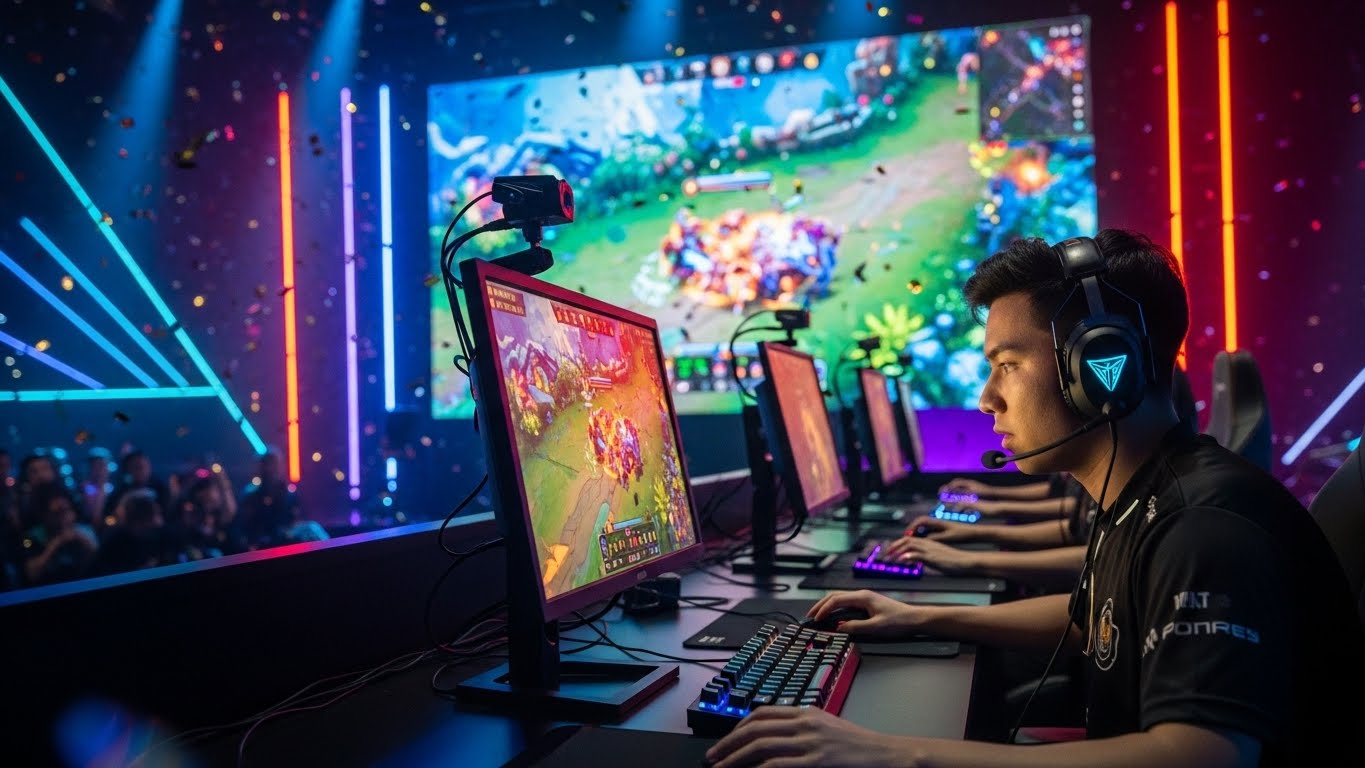
At the heart of esports are the players. Top esports athletes often specialize intensely in one game (or even a particular role within a game). Their routines can mirror traditional sport athletes: rigorous training schedules, diet, rest, strategy reviews, physical exercise, and mental coaching.
Supporting them are coaches, analysts (data specialists), psychologists, nutritionists, and sometimes physical trainers. The pressure is high: performance slumps, losing streaks, and public criticism are part of the job.
Beyond just players, there is supporting talent such as shoutcasters (commentators), analysts, event hosts, video content creators, and influencers who form the broader ecosystem.
Tournament Organizers & Leagues
Competitions come in many forms: open tournaments, invitational events, seasonal leagues, regional qualifiers, and world championships. Organizers structure brackets, enforce rules, manage broadcasting, officiate, and prize distribution.
Prominent esports leagues replicate classic sports structures with regular seasons, playoffs, relegation systems, and franchise models. Some use regional circuits (e.g., North America, Europe, Asia) that culminate in international finals where the best compete globally.
Broadcast & Media
A critical part of esports success is how matches are presented to the audience. The spectator experience is carefully curated: multiple camera angles, player perspective feeds, replay systems, in‑game overlays (scores, stats), analysis segments, and commentary.
Streaming platforms are central—they allow for global access. Broadcasting rights, pay‑per‑view or subscription models, ad revenue, and sponsorship tie-ins are key revenue streams. Social media, highlight reels, and content marketing extend reach beyond live matches.
Supporting Infrastructure
Backend services—such as anti‑cheat systems, network servers, match‑making systems, latency management, and spectator tools—make competitive fairness and smooth viewing possible. Training facilities, high‑performance hardware, fast internet connectivity, and analytics software are also essential.
Cultural and Social Impact
Esports has grown into a cultural force, influencing identity, community, and entertainment norms. Let’s examine how it intersects with society.
Community & Grassroots
Esports thrives on community. Amateur players and hobbyists compete in local tournaments, online ladders, or streaming showmatches. Fan communities form around favorite teams, players, or games. They engage in forums, social media, fan art, cosplay, local events, and view parties.
Grassroots events serve as talent pipelines. Many pro players begin in local cups or small online contests before being scouted by teams. Universities and schools in some regions now have esports programs or varsity teams, giving legitimacy and infrastructure at the educational level.
Youth Culture & Identity
For younger audiences, esports is not just entertainment but identity. It shapes fashion (team jerseys, gamer gear), language (in‑jokes, memes, slang), and social interaction (group viewing, team fandoms). Esports bridges the gap between digital and real worlds, making online achievements significant in real life.
Diversity & Inclusion Challenges
While esports is global, issues of gender, regional equity, socioeconomic access, and representation remain challenging. Many top teams are male‑dominated; female, nonbinary, or marginalized players often face barriers or harassment. Regional disparities in infrastructure and access (internet speed, hardware costs) disproportionately affect players from less developed areas.
Certain games or communities have begun focused efforts toward inclusion: encouraging women’s leagues, safe spaces, code of conduct policies, and grassroots programs in underrepresented areas.
Crossover with Traditional Entertainment
Esports has merged with entertainment forms. Events feature live shows, musical performances, elaborate staging, and celebrity appearances. Broadcasters present esports with the polish of prime‑time TV. Mainstream brands, traditional athletes, and celebrities now invest in or partner with esports teams, further bridging the gap.
Economic & Business Dynamics
The esports industry has matured into a sizeable business. Here’s a breakdown of how money flows and where revenue comes from.
Revenue Streams
- Sponsorships & Advertising
Brands pay teams or events for logo placements, broadcast branding, player endorsements, promotional tie-ins, and branded content. Big tech, peripheral companies, consumer goods, and non‑endemic sponsors (e.g., banking, apparel) all seek visibility. - Media Rights & Broadcasting
Just like traditional sports leagues, esports leagues and tournament organizers can sell broadcasting rights to streaming platforms or networks. Exclusive streaming deals, premium content, and advertising embed media as a major revenue driver. - Merchandise & Ticket Sales
Teams and event organizers sell jerseys, apparel, peripherals, accessories, and physical tickets to live events. Large events draw thousands of spectators, adding ticket, concession, and sponsorship income. - Prize Pools & League Payouts
Tournaments often have large prize pools, either funded by organizers, publishers, or crowd contributions (as seen in some games). Teams and players compete to earn these. Some leagues also distribute revenue shares to participating organizations. - Streaming & Content Monetization
Players and teams produce content beyond competitive matches — vlogs, tutorials, entertainment streams, branded content, behind‑the-scenes, sponsorship integrations. These get monetized via ads, subscriptions, partnerships, and donations. - Game Sales & In‑Game Purchases
Game publishers benefit from in‑game purchases (skins, cosmetic items) and expansions. In some models, a share is tied to esports events or integrated into the broadcasting (e.g. fans buy exclusive skins to support a tournament).
Investment & Ownership
Esports has attracted heavy investment from venture capital, traditional sports franchises, media companies, and celebrity backers. Some traditional sports teams buy or start esports divisions. Investments go toward infrastructure (training houses, broadcast studios), marketing, talent acquisition, and league franchise slots.
Franchise models, where teams pay for stable league membership, provide predictable structure and revenue sharing, though sometimes limit open competition.
Economic Challenges
- Monetization in certain regions remains limited due to purchasing power or limited advertising markets.
- Revenue volatility—dependence on a few blockbuster tournaments or streaming contracts.
- Prize pools often heavily skew to top performers, making income inequality stark.
- High cost of player support, infrastructure, and logistics can strain smaller organizations.
The Competitive Experience
What makes watching or participating in esports exciting? Let’s explore the elements that define the competitive experience.
Strategy, Skill & Metagame
At the highest level, esports is deeply strategic. The “metagame”—the evolving dominant strategies, tactics, and counterplays—shifts via patches, new hero releases, map changes, or balancing updates. Teams must adapt quickly, innovate new approaches, and predict opponents.
Players must master reflexes, mechanics, teamwork, map awareness, coordination, communication, and psychological discipline. The balance of micro (small, split-second individual actions) and macro (bigger objectives, long‑game strategy) is key.
Spectatorship & Storytelling
Esports events are more than matches—they are narrative vehicles. Rivalries, comeback arcs, underdog stories, regional pride, player personalities, and unfolding strategic gambits make spectatorship compelling.
Analysts break down plays, show replays, highlight mistakes or brilliant maneuvers, and build hype. Broadcasters present matches with countdowns, graphics, crowd reactions, backstage footage, interviews, and tension-filled music. All this crafts the story behind the competition.
Live Events & Atmosphere
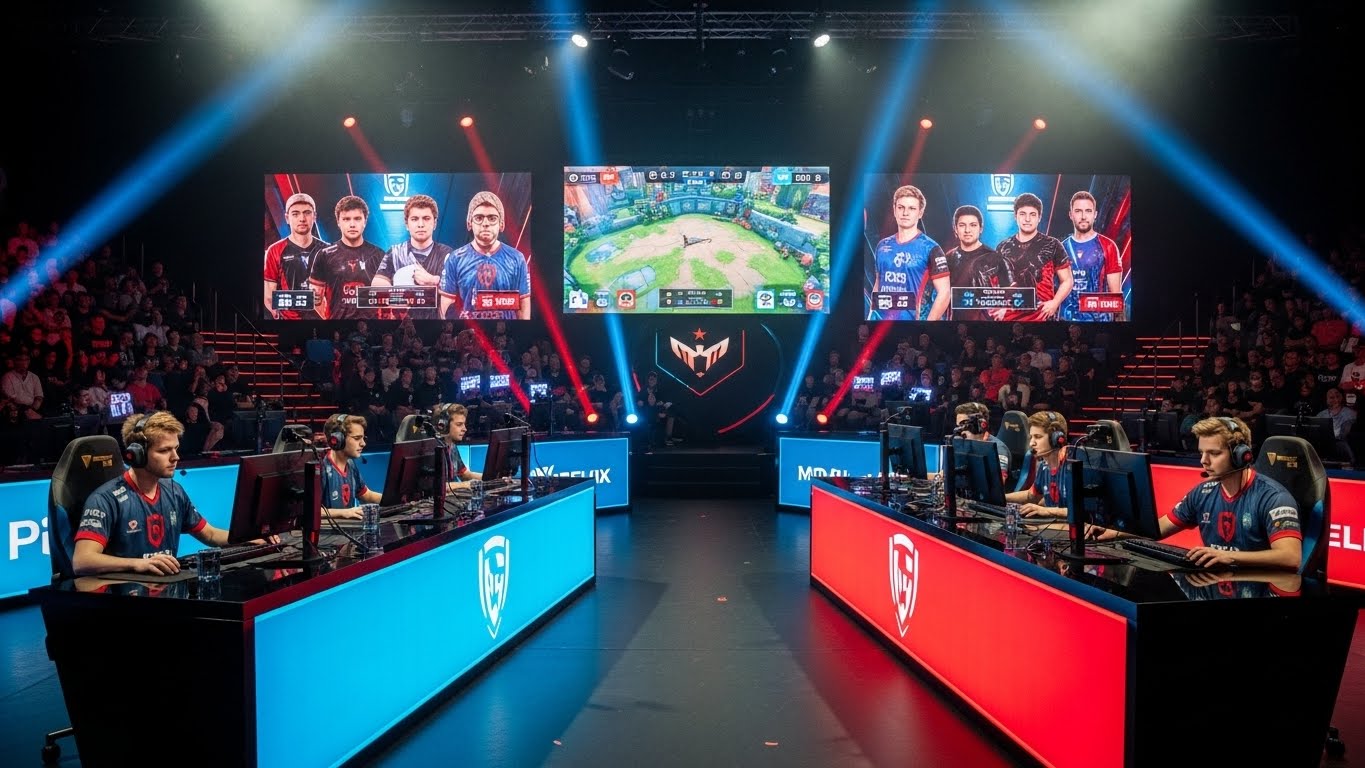
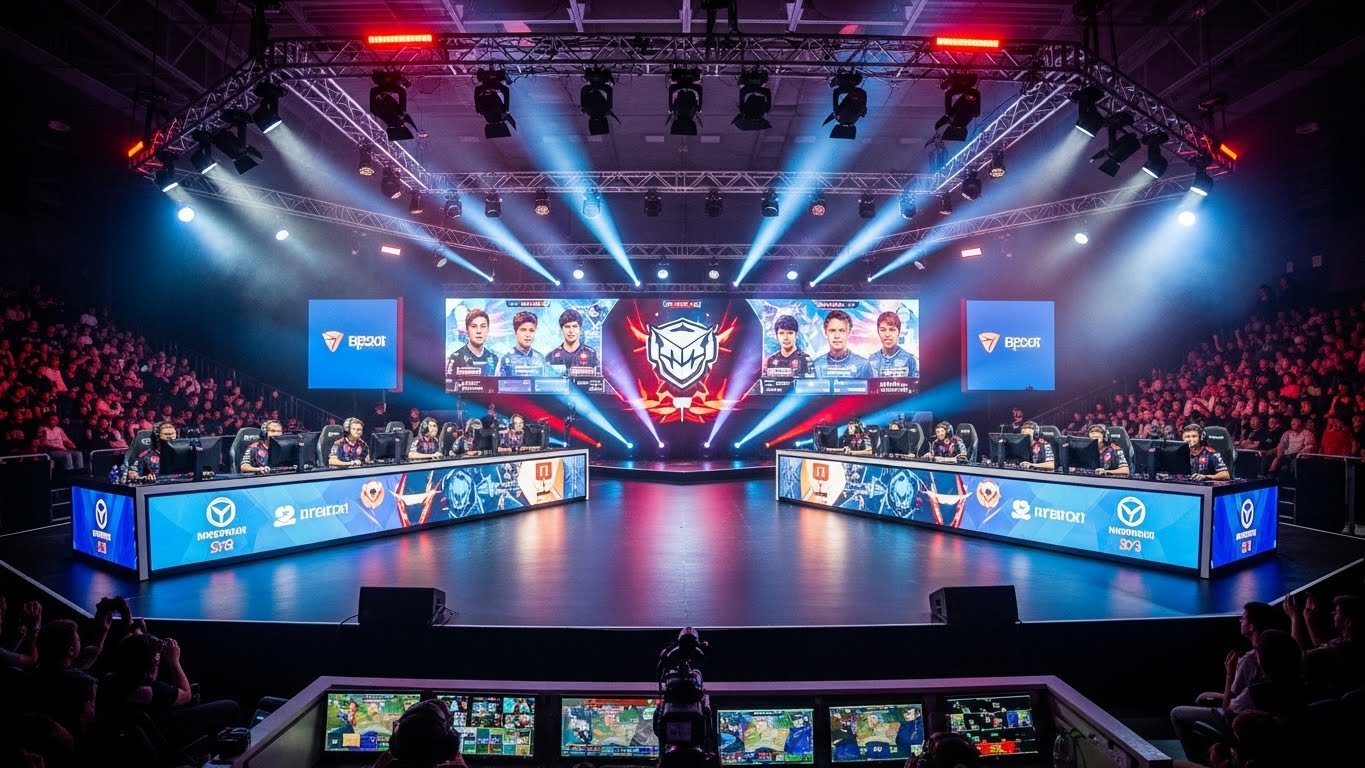
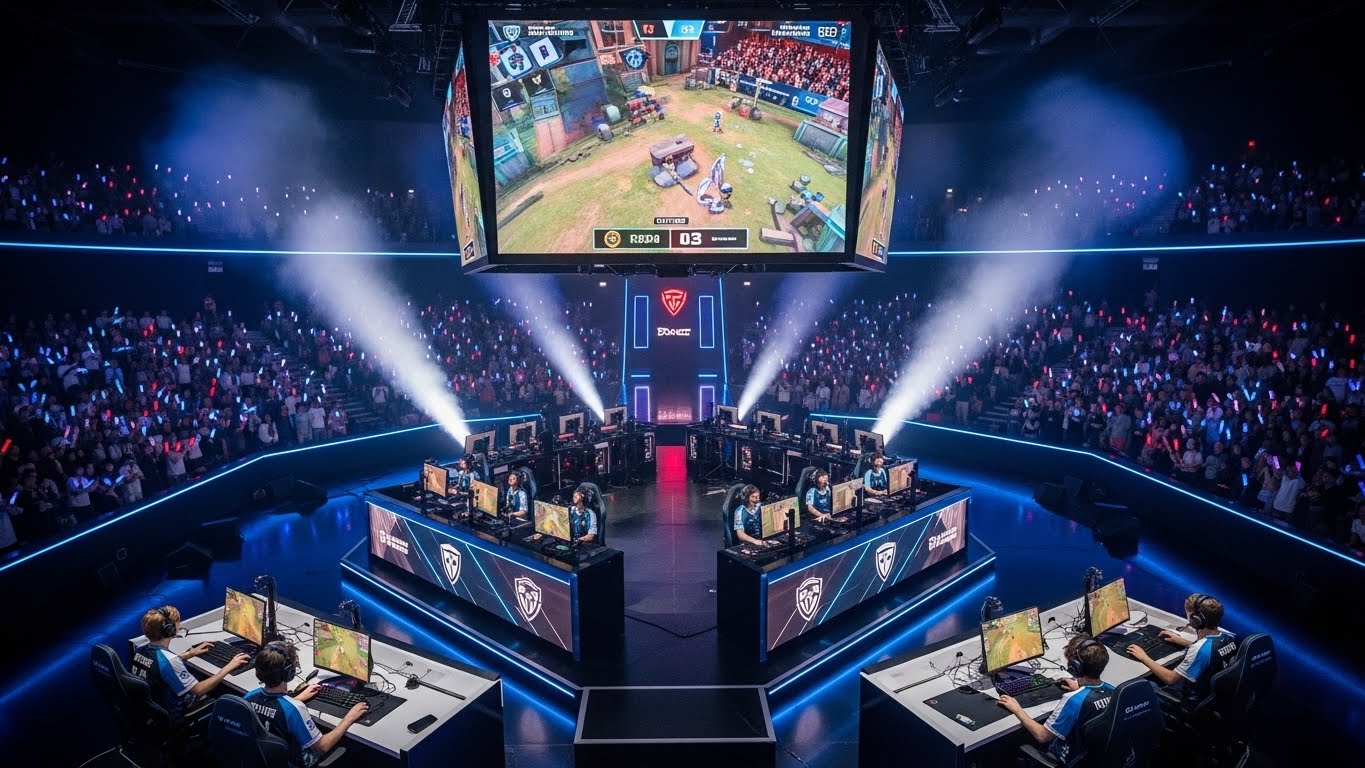
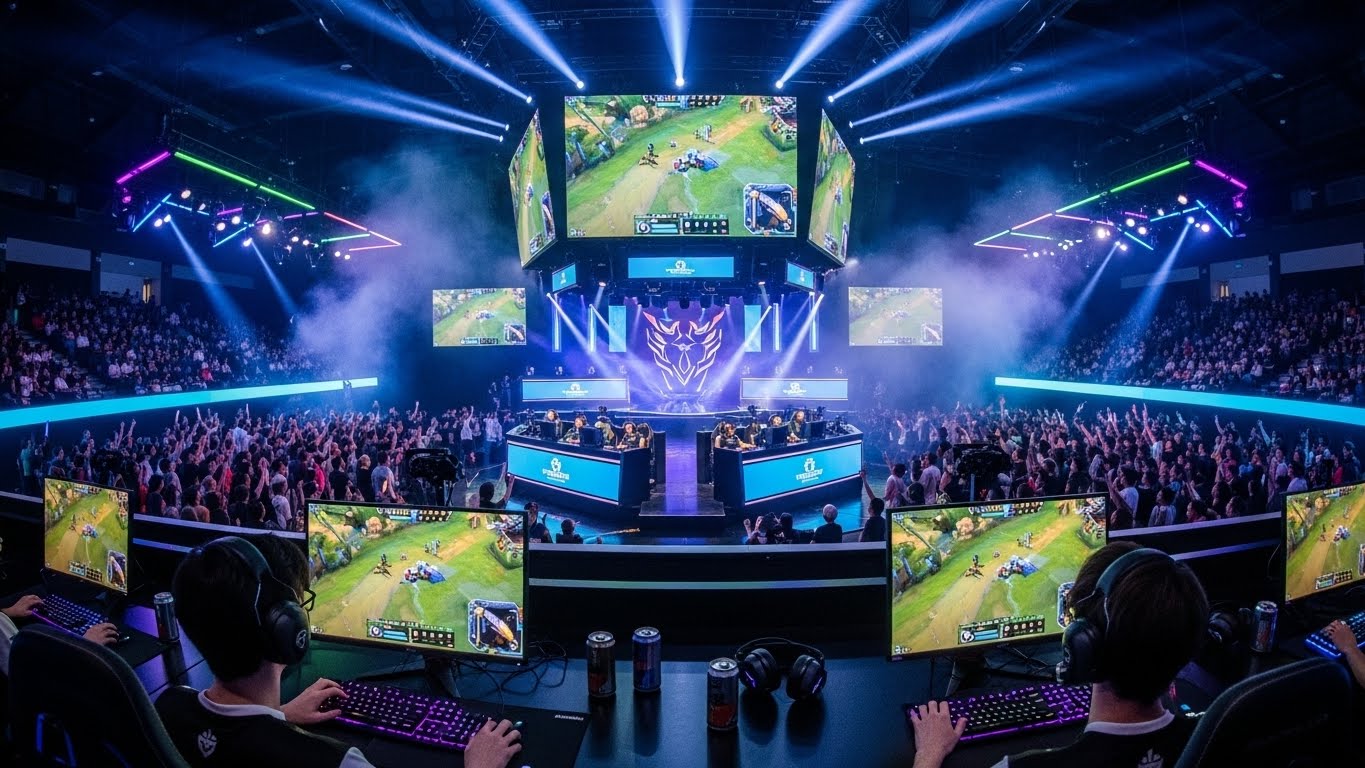
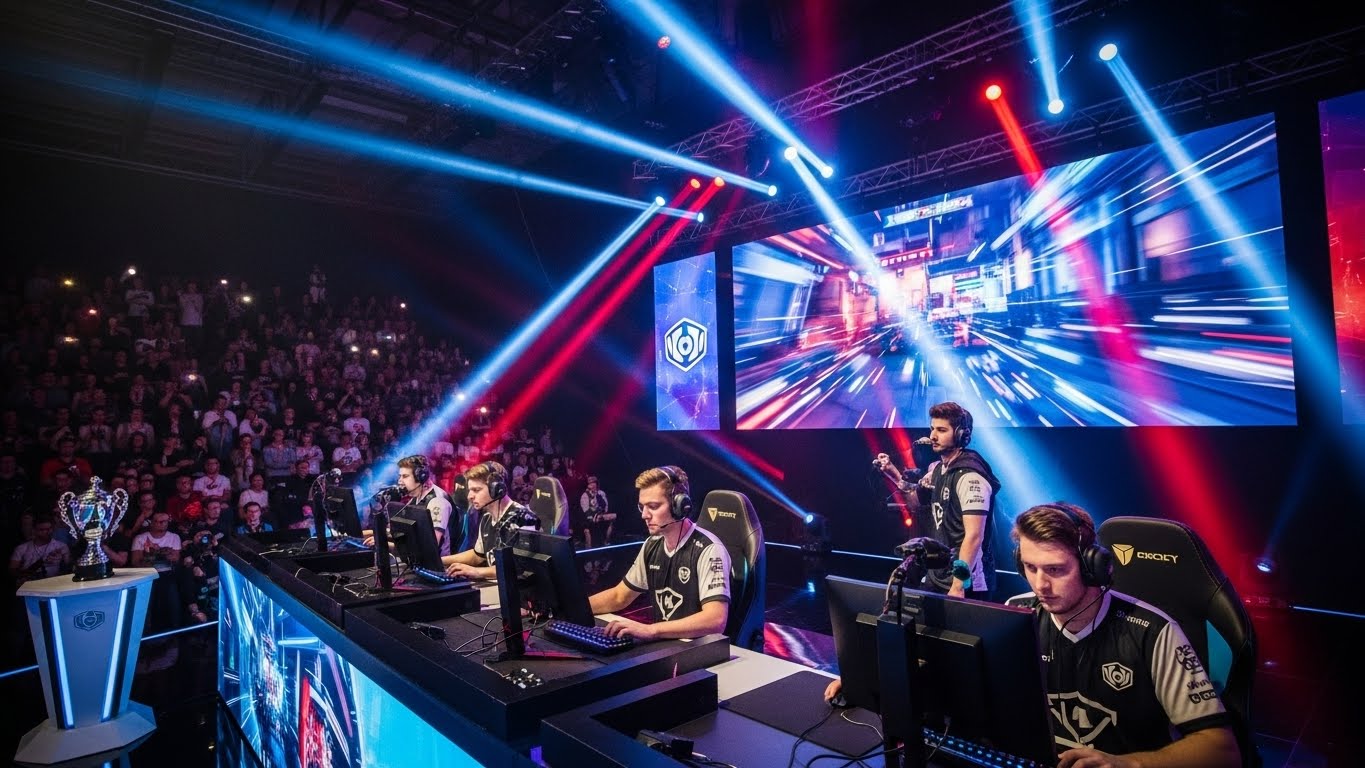
Major tournaments now fill stadiums, convention centers, and arenas. The energy of a live crowd—the roar after a clutch play, chants, cosplay, fan sections, big screens—elevates the experience. Event production includes lighting, music, opening ceremonies, multimedia displays, and interactive elements to engage audiences.
Live events also include side activities: fan booths, merchandise stands, influencer meetups, cosplay contests, and VR/AR experiences. They become festivals, not just sports fixtures.
Technological Innovation
To support immersive viewing, organizers use innovations like virtual camera angles, augmented reality overlays, interactive viewer controls, live statistics dashboards, synchronized polling, and cross‑platform viewing experiences. As technology progresses, things like VR spectating, 360‑degree views, and real‑time data visualizations may redefine how fans experience matches.
Challenges & Criticisms
Despite surging popularity, esports faces significant challenges—structural, cultural, and operational.
Regulation, Governance & Ethics
Lack of unified governing bodies means inconsistencies in rules, contracts, anti‑cheat enforcement, and player welfare. Some regions struggle with match‑fixing, doping (or performance enhancement), or questionable contracts.
Players (especially younger ones) may be vulnerable to exploitation through unfair contracts, lack of benefits, or instability. Ensuring transparency, unionization, or standard contracts is an ongoing concern.
Burnout and Mental Health
High pressure, long hours, practice schedules, constant scrutiny, travel, and performance anxiety contribute to burnout and mental health issues among pro players. Some careers are short due to these stresses or to declines in performance. Organizations increasingly bring in psychologists and wellness programs, but it’s still developing.
Infrastructure & Access Disparities
In many regions, limitations in internet speed, hardware cost, electricity availability, or tournament infrastructure hinder potential talent. Thus, global representation is uneven. Players from underrepresented regions may struggle to compete against those in well‑resourced areas.
Oversaturation & Viewer Fatigue
With many tournaments, streaming content, and games vying for attention, audiences may suffer from fatigue. Not every event can command large viewership, making it harder for smaller tournaments to survive. Balancing supply and demand, and ensuring quality over quantity, becomes key.
Monetization Barriers & Piracy
In some markets, monetization through ads or subscriptions is hard due to low ad spend or user paying willingness. Piracy or unauthorized streaming also eats into revenues. Converting interest into sustainable income is a continuing challenge.
Game Life Cycles & Publisher Control
Since publishers own the games, they wield power over esports ecosystems. If a game declines in popularity or a publisher changes policies, leagues or communities depending on that game may collapse. This makes the ecosystem more fragile than traditional sports tied to universally accepted physical rules.
Esports Around the World
Let’s glance at regional dynamics and how different parts of the world approach esports.
Asia & South Korea
South Korea continues to be a powerhouse, deeply rooted in gaming culture and infrastructure. With internet cafes (PC bangs), homegrown talent, and strong local leagues, Korea is often seen as the cradle of modern esports. China also invests heavily, with massive viewership, publishing power, and government support. In Southeast Asia, esports is rapidly growing, with strong mobile gaming markets and government initiatives backing local scenes.
North America & Europe
These regions host vast numbers of teams, creators, and media companies. With mature streaming markets, sponsorships, and brand partnerships, NA and EU serve both as competition hubs and media engines. They also have established leagues (franchise or open) with structured seasons, playoffs, and major events.
Latin America, Middle East & Africa
In Latin America, passionate communities and rising local organizations are pushing upward. Growth is limited by infrastructure, but enthusiasm is strong. The Middle East has begun hosting major international tournaments. Africa presents a frontier: despite infrastructural challenges, young and tech‑savvy populations are showing interest; local events and mobile esports show promise.
Regional Specialties
Certain games or genres dominate in particular regions due to cultural preference, local ecosystems, or publisher support. For example, MOBA games might be stronger in Asia; FPS stronger in Western markets; mobile esports are very strong in developing regions due to lower hardware barrier. This regional flavor adds nuance to global esports.
Case Studies
To ground the discussion, here are two illustrative cases.
Case Study 1: A Global Championship in Mega Arena
Imagine a global tournament for a popular multiplayer game held in a 15,000‑seat arena. Teams from multiple continents qualify through regional qualifiers. The event has week‑long stages: group play, brackets, finals. Behind the scenes, players stay in an on‑site boot camp, media zones host interviews, and there are fan zones outside with interactive exhibits.
During broadcasts, viewers can choose multiple perspectives (team cams, player cams, overhead view). Analysts live break down plays in real time. Musicians perform during breaks. Merchandise stalls sell team jerseys, signed gear, commemorative pins. The winner receives a multi‑million prize and a trophy. The event is streamed in dozens of languages, with millions of concurrent viewers.
This illustrates the high production values, scale, global reach, and cross‑media spectacle esports can achieve.
Case Study 2: A Local Grassroots Tournament
Contrast that with a small local tournament in a city hall or gaming café. Players register, bring their own PCs or consoles. There’s a simple bracket, commentators drawn from passionate local gamers, a modest prize pool, and spectators from the community. The energy is intimate, personal; new talent emerges. This level is essential for sustaining the pipeline and giving access to many players who might never reach elite tiers.
Both levels—grassroots and elite—support the pyramidal structure of esports development.
What Players and Fans Experience
What motivates someone to play professionally or to watch esports? What is the fan experience like?
Aspirations and Motivations
Many players see esports as a path to recognition, career, and financial reward. Others enjoy mastering a game, pushing competition boundaries, or being part of a team. For fans, esports offers:
- Idols (favorite players/teams to support)
- Spectacle and drama
- Shared experiences (watching with friends or communities)
- A sense of belonging or identity
Some fans transition into creators, coaches, or streamers themselves.
Engagement & Interactivity
Esports allows high interactivity: fans predict results, vote for MVPs, engage in chat during streams, participate in community events, and even influence in‑game rewards (e.g., sale of skins linked to tournaments). This two‑way engagement strengthens loyalty.
Community Rituals
Watching finals with friends or fan groups, cosplay, viewing parties, creating memes or fan art, trading highlights—these are rituals that mirror traditional sports fandom but in digital form. Fans follow player social channels, collect digital artifacts (such as team badges, skins, emotes), or attend live events.
The Future of Esports
What trajectories might esports take in coming years? Let’s explore trends, opportunities, and speculative futures.
Technology Innovations
- Virtual Reality & Augmented Reality: Imagine watching or competing in VR arenas or augmented overlays in real life.
- 360° and Immersive Spectator Modes: Viewers might choose vantage points or control cameras like games.
- Artificial Intelligence Analytics: AI could provide insights during matches, real‑time coaching, predictive stats.
- Cloud Gaming Integration: Lower hardware barriers; viewers might jump from watching to instant participation.
- Cross‑Platform Hybridization: Convergence between console, PC, and mobile platforms may create unified ecosystems.
Esports in Education & Collegiate Levels
More universities and high schools may adopt esports programs, scholarship systems, intercollegiate leagues, and academic curricula around game design, management, and esports business. That professionalizes the path for youth.
Traditional Sports & Esports Convergence
We may see further collaborations: joint stadium events (e.g., halftime for esports showmatch), sports clubs owning esports teams, cross promotion between sports and gaming, hybrid leagues combining physical and digital competition.
Ecosystem Maturation
Expect stronger governance bodies, clearer player rights, better revenue stability, stronger regional development in underserved areas, standardized rules, and contractual norms. Organizations might lean into sustainable models over hype-driven ones.
Global Expansion & Accessibility
Emerging markets will gain influence. Mobile esports, Internet penetration, lower computing cost, and regional funding may make esports more globally equitable. Regional scenes will mature, and champions might emerge from unexpected places.
Reflection: Why Esports Matters
Esports isn’t just playing video games better than others. It is a mirror of broader digital culture: how communities form, how technology changes entertainment, how identities evolve in virtual spaces, and how globalization connects fans and players across borders.
It also demonstrates new models of competition, media, and business in a digital era. The lessons from esports—about engagement, interactivity, creator economies, digital infrastructure, and youth culture—can echo across industries.
Moreover, esports empowers young people in many parts of the world: someone with talent, focus, and access can rise globally, regardless of geography. For regions underrepresented in traditional sports or media, esports offers alternative pathways to recognition and livelihood.
Conclusion
Esports has come far from arcade rooms and small LAN parties. It now commands stadiums, global audiences, high stakes, and serious business. Yet the heart of the movement remains the players, the communities, the passion, and the stories.
The road ahead holds challenges—governance, sustainability, inclusivity—but also enormous opportunities. As technology evolves, infrastructure deepens, and global access broadens, esports may continue transforming how we view sport, entertainment, and digital culture.
Whether you’re a player dreaming of going pro, a fan cheering from your sofa, a content creator, or someone simply curious about this phenomenon—esports offers a lens into the future of interactive competition. The screen may be where the game unfolds, but its impact extends far beyond.